



Overview of Manufacturing Sectors
- Metalworking and mechanical engineering – machinery production, component manufacturing, machining, welding, and industrial fabrication
- Food and beverage manufacturing – processing, packaging, cooling systems, preservation technologies, and quality assurance
- Chemical and plastics production – industrial chemicals, plastic components, polymers, coatings, and cleaning products
- Electronics and industrial automation – sensors, control systems, circuit boards, robotics, and automation solutions
- Wood processing and furniture manufacturing – timber processing, furniture production, interior elements, and wood-based components
- Packaging and logistics solutions – industrial packaging, storage systems, material handling, and distribution support
- Sustainable and energy-efficient manufacturing – resource-efficient production, recycling technologies, renewable energy integration, and low-impact materials
01
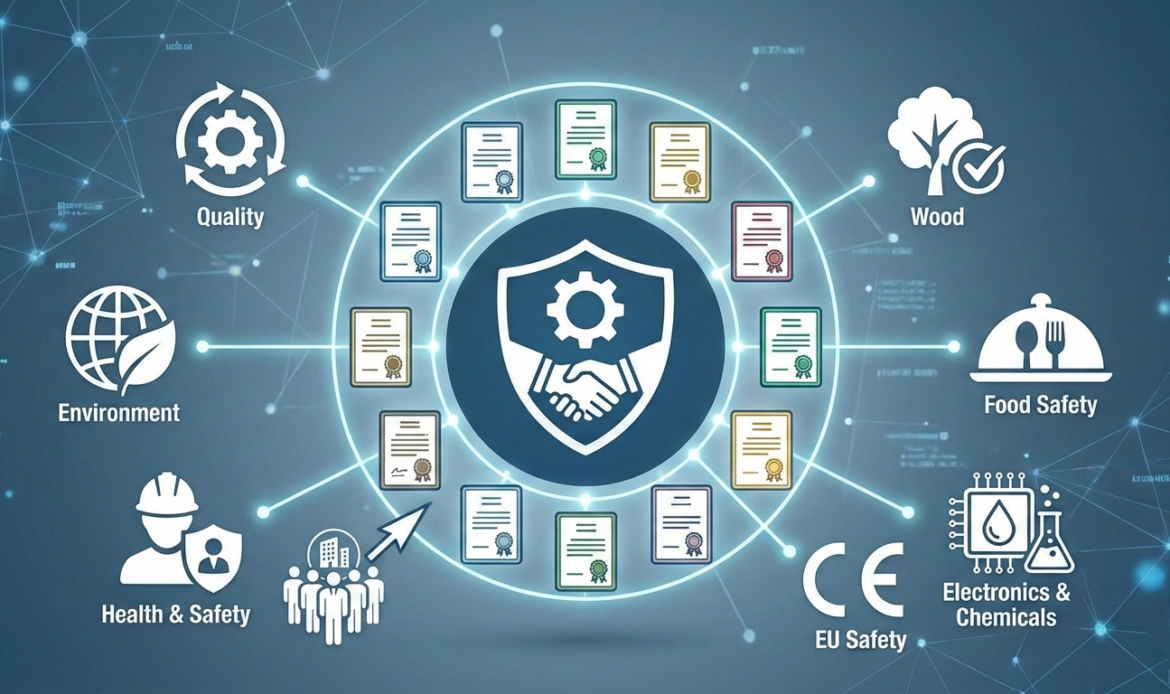

Sector certificates
Certificates help prove a company’s quality, safety, and reliability to customers and partners. Key internationally recognized certificates include:
- ISO 9001 – quality management system.
- ISO 14001 – environmental management.
- ISO 45001 – occupational health and safety.
- FSC / PEFC – responsible forest management (wood industry).
- HACCP / ISO 22000 – food safety and hygiene.
- CE marking – EU safety and quality compliance.
- UL, RoHS, REACH – electronics and chemical industry compliance.
The association helps members select and apply for certificates based on target markets and sector requirements.
02


Sector standards
Standards provide the foundation for efficient production, safety, and international interoperability. They are not just rules but practical tools that help avoid errors, build trust, and facilitate entry into foreign markets. Common standards in manufacturing include:
- LEAN – methodology to increase efficiency and reduce waste.
- Six Sigma – data-driven quality management to minimise defects.
- ERP integration standards (e.g., ISA-95) – seamless data exchange between production and management systems.
- ISO/TS 16949 – quality standard for the automotive industry.
- GMP (Good Manufacturing Practice) – required standard primarily in pharmaceutical and food industries.
- ISO 50001 – energy management system standard.
- Industry 4.0 and Smart Manufacturing standards – frameworks for digital production and data management.
Our role is to help members understand and implement standards, thereby increasing their international competitiveness.
03